2 November 2026
Factories of the Future
Inventing Our Path Forward, Together
Toyota Chairman Akio Toyoda has emphasised that a passion for invention is Toyota’s true starting point. Through monozukuri, or the art of making things, the Toyota Group aims to invent its path forward together with its partners. Toyota’s factories of the future will put people at the centre, focusing on employee fulfilment and productivity.
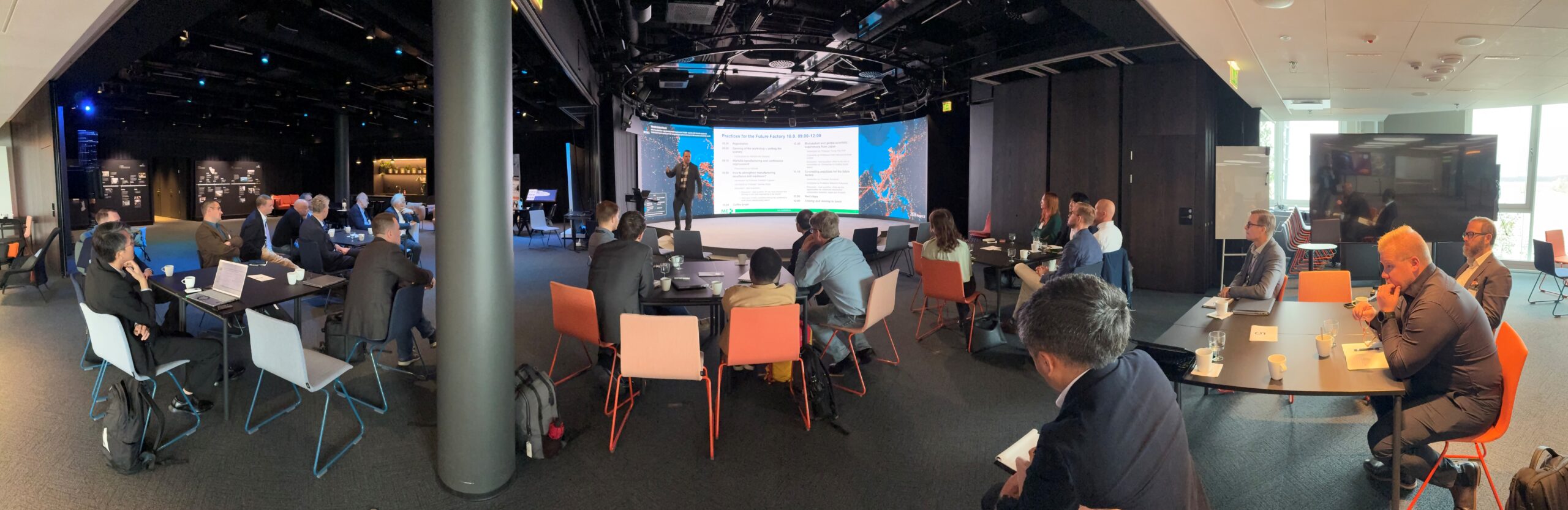
Practices for the Future Factory workshop 10.9.2026
These ambitions provided the backdrop for the Practices for the Future Factory workshop, held at Wärtsilä Helsinki Campus on 10 September 2026. The workshop offered an opportunity for Finnish and Japanese participants to exchange experiences and insights, drawing on two countries with strong but distinct manufacturing traditions. We share a commitment to exploring how deep manufacturing knowledge can be combined with digitalisation and AI, while continuing to develop the capabilities of those working closest to production.
At the heart of the discussion was a shared challenge: how can we strengthen manufacturing excellence and resilience while building the capabilities required for a more digital and AI-enabled industrial future?
In its vision for a future mobility society, Toyota aims to address the distinct challenges and expectations of different regions through its “best in town” concept. Toyota divides the world into eight major regions and manages its businesses according to their respective characteristics. For Finland, the opportunity lies in supporting Toyota through complementary capabilities. The TOYOTA GAZOO Racing World Rally Team, based in Jyväskylä, demonstrates the potential of Finnish–Japanese collaboration.
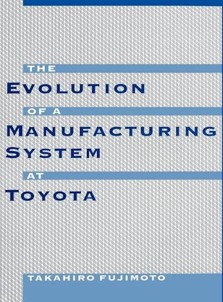
Fujimoto, T. (1999). The Evolution of a Manufacturing System at Toyota. Oxford University Press.
At the workshop, Professor Takahiro Fujimoto of the University of Tokyo highlighted Japan’s strengths in integral manufacturing and the importance of comparative advantage. Finland, meanwhile, combines a strong industrial and engineering heritage with extensive experience in digitalisation.
The discussions highlighted the potential of bringing these strengths together: combining deep manufacturing expertise and continuous improvement capabilities with digital technologies and new ways of working.
Professor Young Won Park introduced the Genba Scientist approach, while participants also reflected on Wärtsilä’s Citizen Development activities. These approaches share common ground, yet differ in ways that create opportunities for mutual learning.
The concluding discussion raised a broader question: how can the people closest to manufacturing become active participants in digital and AI-driven transformation?
Factories in a New Geopolitical Context
Factories of the future will increasingly be shaped by geopolitical developments. Recently Audi announced plans to establish its first US manufacturing facility in Georgia. The planned investment is intended to strengthen Audi’s competitiveness in the US market and reduce its exposure to trade and currency risks associated with international production and imports. Meanwhile, intensifying competition from Chinese automakers such as BYD and Geely is adding to the pressure on European car manufacturers to restructure their businesses. Volkswagen, Audi’s parent company, is considering significant changes to its German manufacturing footprint, including plans that could bring vehicle production to an end at four German plants.
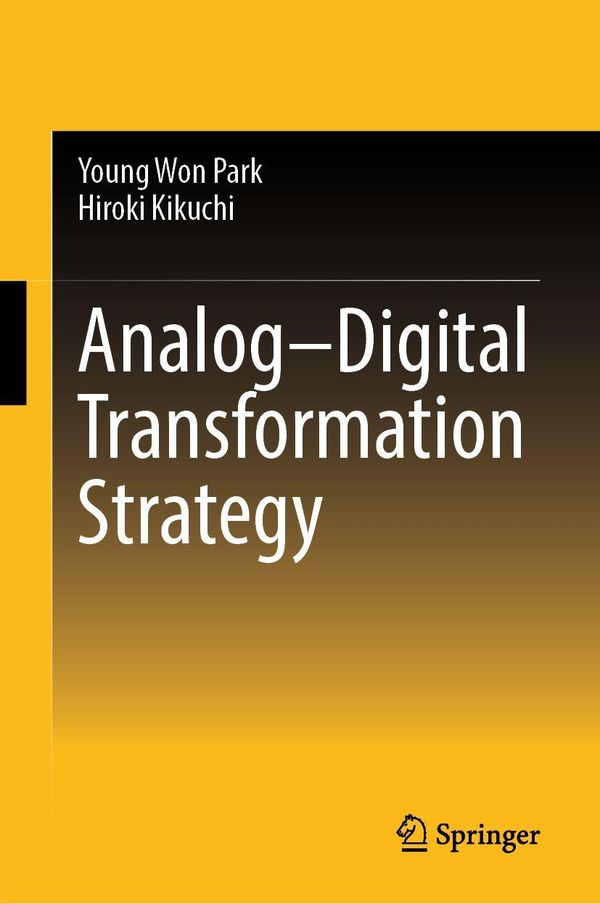
Park, Y. W. & Kikuchi, H. (2026). Analog–Digital Transformation Strategy. Springer Nature.
Factories have become strategic assets that can strengthen companies in an era of geopolitical competition. By combining different forms of knowledge, learning across organisational boundaries and turning shared challenges into new opportunities, factories can reinforce their strategic role within their organisations.
This turbulent geopolitical context is prompting manufacturers to seek collaboration with like-minded partners. The notion of capability-building competition, introduced by Professor Fujimoto three decades ago, is more relevant than ever. However, combining the capabilities needed for the future requires manufacturers to develop strategies that integrate established manufacturing practices with digital transformation, as emphasised by Professor Young Won Park.
The transformation of the manufacturing sector offers promising opportunities for Finnish–Japanese cooperation. Discussions at the workshop covered manufacturing practices, knowledge transfer, joint capability building, AI, digital infrastructure, research projects and exchange programmes.
The most successful factories will do more than excel in production: they will help orchestrate innovation ecosystems and shape the future of manufacturing. Our Finnish–Japanese collaboration aims to learn from such role models and jointly strengthen the competitiveness of our respective industries. The Deepening Integration in Manufacturing project serves as a catalyst for this work.
Synocus is engaging companies and universities to continue the dialogue between Finland and Japan, with the aim of establishing a platform for innovation collaboration between industrial companies in the two countries. This platform will also benefit from the development of SpringboardX, a learning platform that supports the acceleration of clean industrial transformation, with Finland serving as a role model.
If you would like to learn more about our collaboration with Japan or SpringboardX, we would be happy to hear from you and provide further information.
Niklas Koski
Senior Project Manager, Synocus
niklas.koski(a)synocus.com
+358 10 212 4730