27 May 2026
Data-driven excellence
The CEOs of Airbus, ASML, Ericsson, Mistral AI, Nokia, SAP, and Siemens issued a ‘wake-up call’ at the beginning of May, urging stakeholders to collectively scale European technology, industry, and AI competitiveness. These leaders argue that the next phase of innovation will be defined by how digital capabilities are applied in the real world—across industries, infrastructure, and entire economies. To create value, technologies like artificial intelligence must be connected to the physical systems they are meant to improve. This means building strategic resilience by using trusted technology and breaking down silos to accelerate innovation. We urgently need to come together to turn ambition into action.
Similar goals underpinned the Impact-driven Data-based Process Development (IDPD) initiative. IDPD was organized as a workshop series, with the kick-off on March 2nd and two virtual workshops on March 21st and April 24th.
Sharing experiences
The IDPD initiator, André Norrback, wanted the workshop series to focus on real-life cases. These cases should illustrate how data can improve processes and strengthen competitiveness. Sharing experiences should accelerate learning and leverage the complementarities of the DIM partners, i.e., Konecranes, Mirka, Promeco, Synocus, Tampere University, and Wärtsilä. The workshop series was also a way for Mirka to bring forward Data-driven circularity, the DIM workstream for which Mirka is responsible.
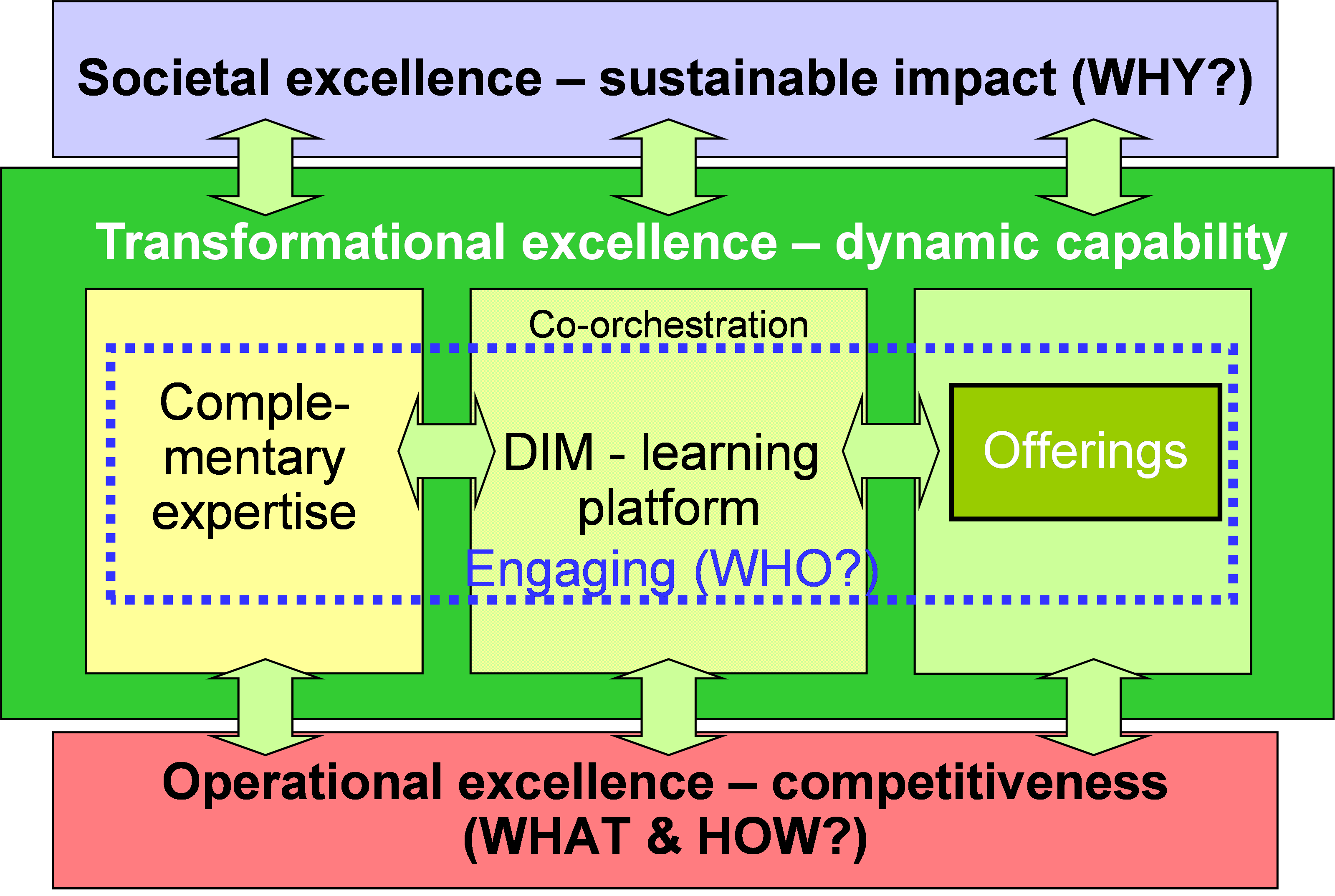
Synocus and Mirka agreed that the workshop series could also be used to better understand how can support innovation collaboration—another focus area of the DIM project. At the kick-off event, the idea of viewing the DIM project as a Learning platform was illustrated as shown in the image on the right.
Process development use cases
The cases presented in the workshop series share the ambition to strengthen the competitiveness of their respective companies. The discussions covered a variety of cases, but the three most developed ones will be briefly introduced here.
Data-driven predictive maintenance (Mirka)
The Mirka predictive maintenance case focuses on the exhaust fans located on the roof, which are used for the production lines. Mirka has installed vibration sensors on the fans and has been collecting data for about six months, resulting in approximately 450 million rows of time series telemetry data, as each sensor tracks around 15 variables every second.
Mirka is now moving from the monitoring step to building the first model in this case. The initial step is to validate the various anomalies and compare them to the maintenance history and known events, then begin labeling the data. This involves labeling different warnings, alerts, and maintenance actions to start building a dataset suitable for training. Changes in vibration patterns help identify issues such as bearing wear, imbalance, or misalignment—before they cause failures.
The primary goal is to help the maintenance team. Based on a more reliable fact base, it might be possible to run the fans one or two months longer before needing to change parts. This kind of cost savings is one potential benefit. It is also very important to avoid failures in production. If the production line stops because of problems with the fans, it becomes very expensive, so minimizing this risk is a clear benefit. Having a better overview of the bearing’s condition helps to achieve this.
Extended digitalization in assembly line (Wärtsilä)
The monitoring and control of the cylinder head assembly line at the Wärtsilä Vaasa factory is comprehensive—it includes image collection, event collection in addition to the traditional ERP and PDM data. The architecture is based on a publish-and-subscribe model. Wärtsilä doesn’t use APIs directly from the automation system; instead, data flows to the Edge, where APIs and other methods are used for communication.
Production events are the starting point of this case. The process begins by generating and consuming production events from IT. This provides the line with the information needed to start execution. Quality control of automated assembly is done automatically through image processing where mistakes by automation can visually be found. The parts are assembled, and images are captured via cameras mounted on robot arms. These cameras are complemented by an algorithm that assesses whether assembly tasks have been completed successfully, categorizing them as pass or fail. More flexible machine learning based computer vision models have proven to have higher accuracy than traditional computer vision. The result is fewer stops of the line to manually check and correct due to with false results.
Many issues can affect the interpretation of an image. The goal is to make all images as consistent as possible from the start, because it is much more difficult to modify them later. In general, it was suggested that if something is visible to the human eye, then AI can also detect it. You simply need to select the right model and train the dataset appropriately. If you can see something with your own eyes, then a camera should also be able to pick it up, since it captures pixels. The key is to train the system in the right way, so it identifies things correctly.
Asset tracking (Konecranes)
One of our targets in the Zero4 Veturi project at Konecranes is to create a Common Material Flow Platform that provides a holistic view of production, material flow, and intralogistics in general. This platform should connect the different IT and OT systems that exist in production facilities, while also integrating new data sources for information that does not currently exist.
Factories typically track the location of critical materials and assets but not ordinary objects, such as minor sub-assemblies. Knowing the positions of these items would provide us with a more sophisticated overview of how the factory is performing. We leveraged the workshop series to engage the DIM partners in a dialogue and gain knowledge about which kinds of assets should be tracked to create better value in different kinds of factories. Between the workshops, we collected feedback from DIM partners by asking questions such as: What is happening in the process? What assets could be used to track the state of production, either directly or indirectly? Which events on the production line create the factual basis for decision-making? How can decision-making become more objective when trying to improve lead times?
Konecranes is piloting the asset tracking solution at its own factories. One pilot case is tracking the progress of production through the production line. In discussions with DIM partners, it was discussed that a single technology is not suitable for all kinds of factories. We cannot use one tracker for everything as it does not cover the variety of different needs.
One example of this is the question of accuracy. For example, for a tightening tool, it is enough to know where it is located so that it can be retrieved. However, if we want to know which exact bolt was tightened, an accuracy of 10 centimeters or less is required. At that point, the business case changes completely, since the technology cannot easily reach that level of precision, or it requires a very high upfront investment, possibly involving a multi-technology setup.
Exploring the potential of AI
The potential of AI to make processes more efficient was a theme brought up in all the use cases discussed during the workshop series. In the second workshop, Vilhelm Sundstedt from Mirka shared his experiences from using AI to drive process efficiency. In 2024, Vilhelm started developing a system to analyse and summarize monthly sales visit notes across markets to support Mirka’s customer relationship management process with AI. The project proved to be a valuable experience, providing many practical insights and important lessons learned along the way.
Based on the positive results of the first AI initiatives, Mirka has continued to use AI in many different processes, such as improving the way scientific articles are used to simplify workflows and enhance productivity. Mirka has also used video streaming to define assembly events and map the workflow of its assembly lines. The data from the video stream was used to train the AI model. The results exceeded expectations. Now, Mirka actively looks for additional opportunities to use AI to generate hypotheses when dealing with complex issues.
Wärtsilä has many different experiments and proofs of concept related to AI in the context of its extended enterprise. Wärtsilä also encourages the active use of AI among its employees. For this purpose, it has launched a concept called DataMob. In a DataMob, a team, normally five people, works on real-life data problems. The team works together on one laptop, constantly changing roles. Every five minutes, a different person drives the problem solving on the laptop together with a navigator team member (and quite often an AI tool, in a vibe coding manner). Meanwhile, the “back bench” can brainstorm and think about the overall direction of the problem solving. This forces people to adapt quickly and break through the pain barrier. It does not matter if you do not know how to code—you will figure out something in five minutes when it is your turn. Struggling together also creates a fertile ground for good team spirit. Coming up with a perfect solution is not the end goal; collaboration, learning by doing, and rapid innovation are. This builds a foundation for having people with knowledge to apply and transform processes with AI where it creates added value.
Excellence Framework and learning platforms
The Deepening Integration in Manufacturing (DIM) initiative aims to engage companies and research institutions in a community-driven innovation ecosystem to address the twin transition. The conceptual foundation for the capability-building activities is the Excellence Framework. Leading manufacturing companies must simultaneously pursue process, offering, innovation, and societal excellence. The DIM initiative supports innovation excellence by combining internal and external integration to better equip the Finnish mechanical engineering sector to meet the challenges of the twin transition.
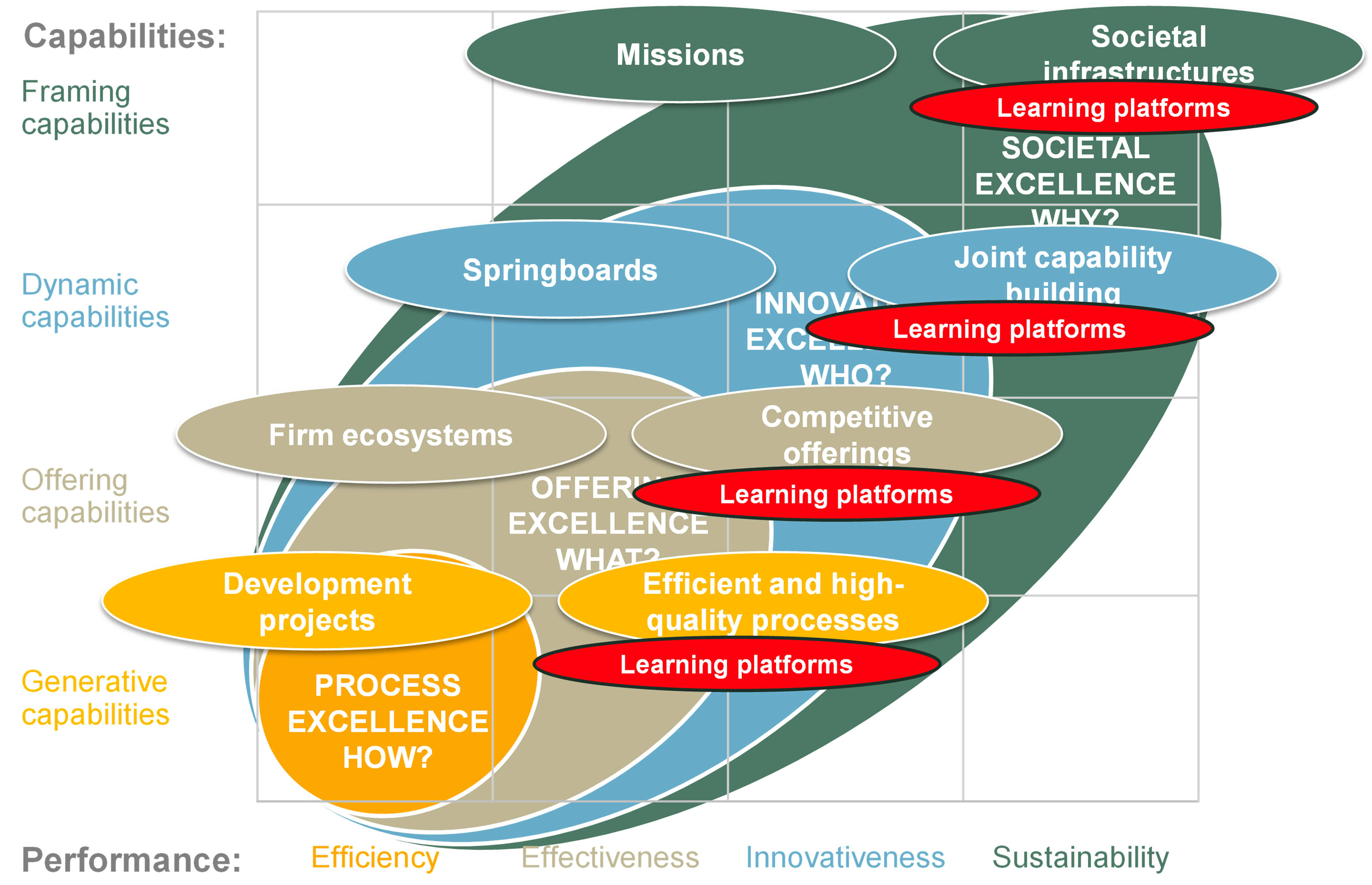
The experience from the IDPD workshop series is that the concept of a learning platform can be applied across all four domains of the Excellence Framework. How to do this in the next phase of the DIM collaboration will be discussed at the upcoming workshop in Tampere on 10 June 2026.
Moving forward
The IDPD workshop series illustrated that the DIM community could evolve into a springboard bridging broader ambitions to make Finnish manufacturing more competitive with efforts to drive efficiency through successful proofs of concept and pilots. As seven European CEOs stated in their meeting with European Commission President Ursula von der Leyen, Europe is losing global competitiveness every day. We cannot regain momentum without innovatively applying digital capabilities in the real world. To create value, technologies such as artificial intelligence must be connected to the physical systems they are meant to improve. Our IDPD workshop series addressed precisely this challenge: how digitalization can improve predictive maintenance, assembly line quality control, and asset tracking. What we learned is that there are common processes needed across organizations and domain areas. Developing such processes to accelerate learning and scale innovations is the foundation for growth.
Building strategic resilience also means driving the use of trusted technology and breaking down civil–military silos to accelerate dual-use innovation. The CEOs argued that we need a dedicated forum where business and political leaders can continuously align to ensure that policies are grounded in industrial reality and global market dynamics. By focusing on execution, the IDPD workshop series was an attempt in this direction. We will do our utmost to ensure that the learning gained can be scaled and spread to benefit others as well, and to turn our technological strengths into real-world progress.
André Norrback
Technology Manager
Mirka
Niklas Koski
Senior Project Manager
Synocus