31 March 2026
Toward more transparent material flows
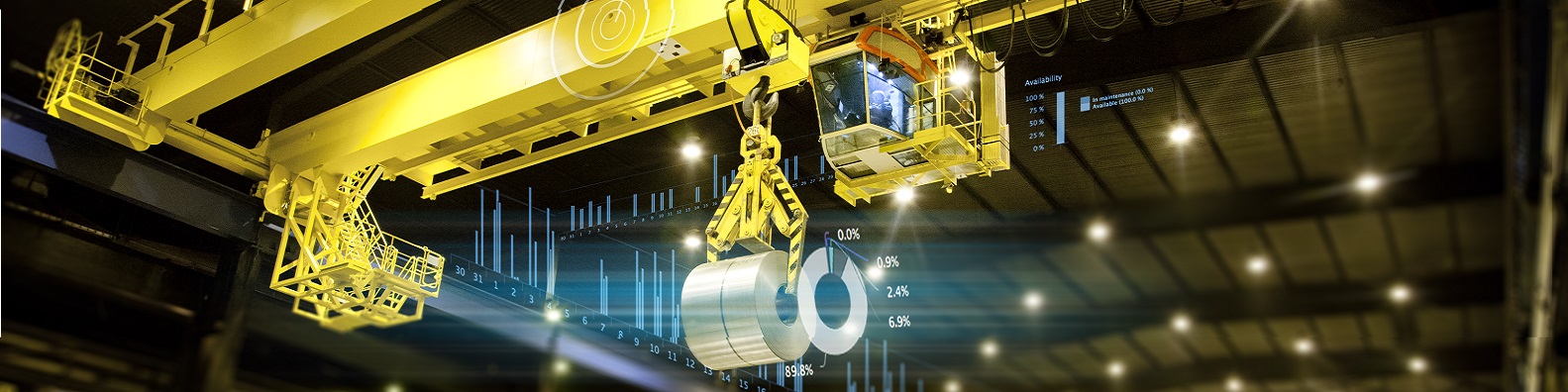
Manufacturing environments generate vast amounts of data. Yet this data is often scattered across systems, devices, and tools, making it difficult to gain a clear, real-time understanding of production progress. Fragmentation slows down decision-making and makes it harder to identify bottlenecks and improvement opportunities.
As part of the Zero4 program, Konecranes explores in the Deepening Integration in Manufacturing project (DIM) how data from different production sources can be brought together into a single, easy-to-use view. DIM addresses the challenge by bringing relevant data into one place, enabling fact-based decisions and more efficient production flow management. Together with a global energy and marine technology company, Konecranes researches future data collection and visualization solutions that support day-to-day production management and continuous improvement.
The challenge: abundant data, scattered systems
Factories are rich in data, but without integration, its value remains limited. When information is spread across multiple systems, gaining an overall view of production becomes time-consuming and complex. Our goal is simple: By consolidating data into a unified view, production progress can be monitored in real time, material flows optimized, and improvement efforts directed where they have the greatest impact.
From cranes to comprehensive material flow insights
Cranes are no longer just lifting equipment. They are key sources of information on material movement, work phases, and potential delays. In the DIM project, our starting point was to identify which data from the crane environment is genuinely valuable to users and ensuring that the data is reliable and available when needed.
The project takes a holistic approach to material flow data, focus particularly on:
- crane usage and location data,
- data from other digital systems within the factory environment, and
- material movement data.
Our goal is to create a unified overview of how material moves within a factory and to create transparency to processes that have traditionally been seen as black boxes. When data is integrated into a single view, material flows and production stages become clearer. The collected information is visualized in a clear and easy-to-understand format, enabling faster decision-making and helping direct improvement efforts where they matter most, for example, by highlighting delays and recurring bottlenecks.
Developing solutions through collaboration
In the project, solutions have been developed through close collaboration with partners. We’ve built a customized data collection system for our partner, enabling broader utilization of crane data. Crane data now serves as a key input for monitoring production and developing and optimizing material flows. Next, we continue to expand the view by integrating additional factory equipment and data sources, based on what creates the most value for production.
Moving toward more transparent, data-driven production
DIM is a concrete step towards more unified, transparent, and data-driven manufacturing. By connecting material flows, equipment, and digital systems, the project strives to support everyday decision-making and continuous improvement, bringing production closer to a future where material flows, equipment, and digital systems work together seamlessly.
Taru Nyysti
Communications Coordinator
Konecranes
Henri Helkiö
Manager, Material Handling Research
Konecranes