10 October 2025
Exploring Japan: A Journey of Manufacturing Excellence
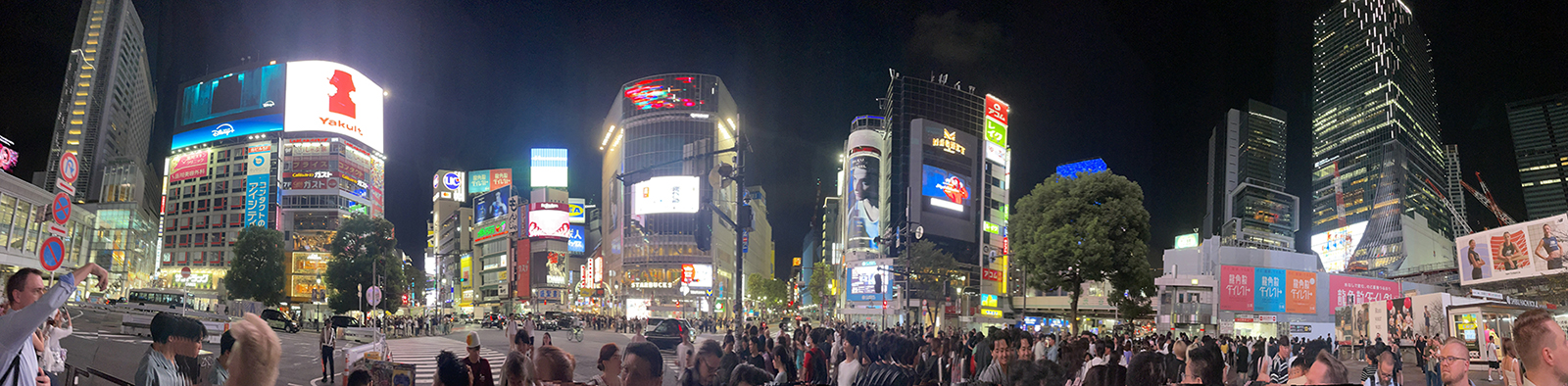
Exploring Japan with DIM. Photo: Juha Päivike
In mid-September 2025, ten participants from the Deepening Integration in Manufacturing (DIM) project visited Japan. The trip was organized in collaboration with the University of Tokyo, and its professors Takahiro Fujimoto, Young Won Park, and Mitsuhiro Fukuzawa. The Finnish delegation was further assisted by professors Sungwoo Byun and Hiromi Shioji during their stay in Japan. The Finnish delegation also visited the Expo 2025 Osaka, where Eiji Atsumi from Business Finland organized the preparations and welcomed the Japanese guests at the Nordic Pavilion. The visit to Japan provided valuable insights into the Japanese manufacturing sector and laid the groundwork for future research collaborations between Finland and Japan.
Key Insights into Japanese Manufacturing
The delegation started with a workshop at the University of Tokyo’s Manufacturing Management Research Center, established in 2004. The workshop was guided by Professor Fujimoto, who highlighted the challenges and opportunities in integrating physical material flows with cloud-based platforms. The Capability-Architecture-Performance approach was introduced as a framework to understand the dynamics affecting manufacturing companies. In Japan, this balance aims at being good in three ways: in the enterprise, in the industry, and in the community.
The visit to Suruga Production Platform, part of Misumi Group, showcased their precision processing technology and the innovative meviy platform, which significantly reduces the time for procuring mechanical components. The meviy platform has achieved market leadership in Japan and is highly regarded for its contribution to improving productivity in the manufacturing industry.
Fuji Electric‘s strength lies in its ability to develop and manufacture semiconductors, contributing to the goal of a decarbonized society. Fuji Electric supports its customers in the digital transformation and applies the principles of capability building with the support of the University of Tokyo. Fuji Electric’s dynamic capabilities framework consists of three elements: sensing, capturing, and transforming, through which business processes are improved with the help of digital technologies.
A research collaboration workshop discussed future research collaboration between Japanese and Finnish institutions. Five potential research topics were identified as candidates for continued Japanese-Finnish collaboration:
- Including Finnish companies in the ongoing kaizen study at the University of Tokyo.
- Collaboration between Genba Scientists and Data Scientists.
- Experiences from AI-driven platforms.
- Various governance structures for large-scale projects.
- The digital transformation of the marine and port sectors.
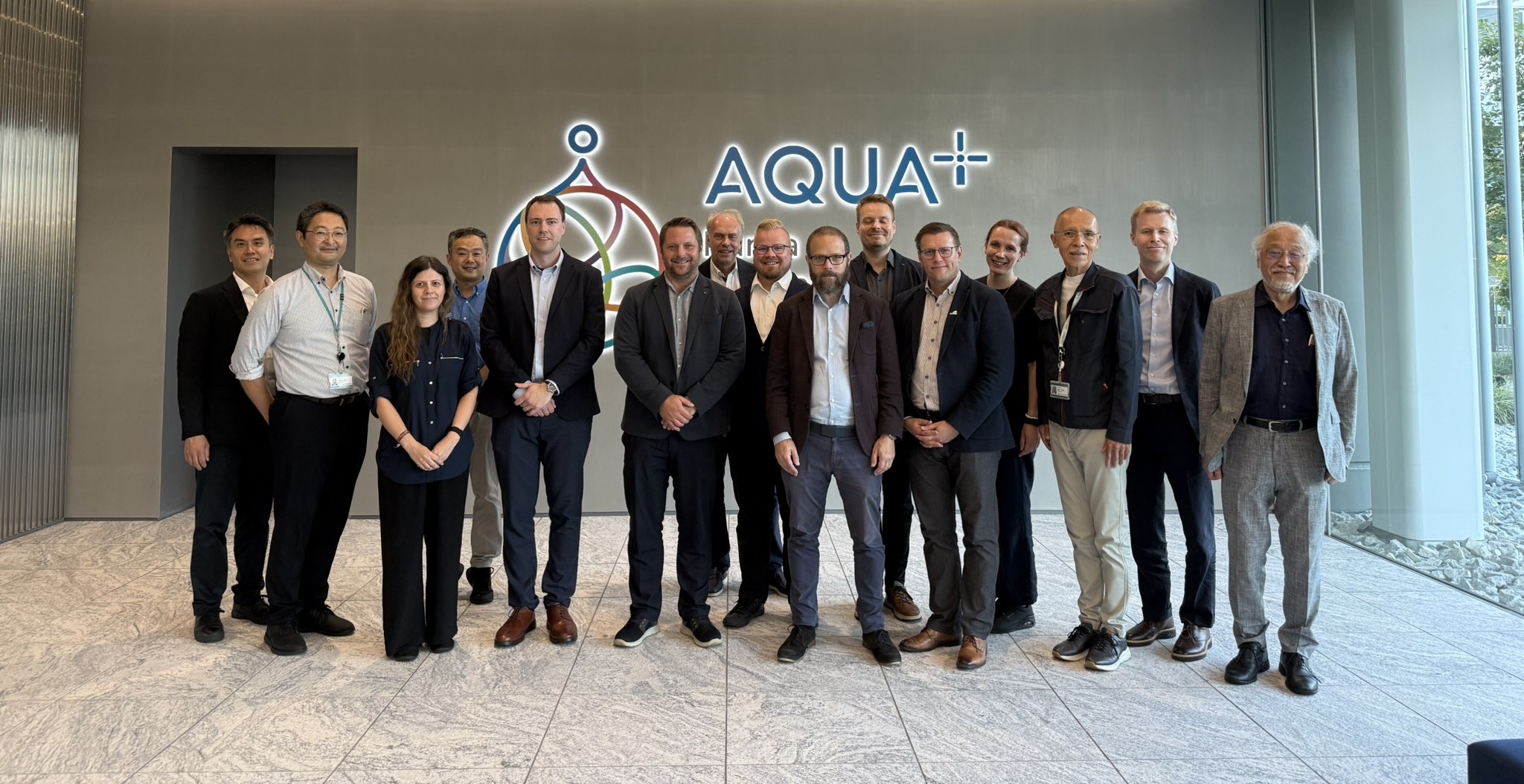
The DIM delegation together with Japanese researchers at the Kurita Innovation Hub
The DIM delegation visited the Kurita Innovation Hub of Kurita Water Industries, a 38,000 sqm facility dedicated to global research, development, and co-creation. The hub has three main missions:
- Accelerating Innovation through Co-creation
- Training Employees to Solve Social and Industrial Issues
- Activating Local Communities
Kurita provides chemicals and solutions for water treatment, with its biggest customer segment being semiconductor manufacturers.
The visit to Expo 2025 Osaka emphasized the importance of international branding and high-level discussions between Finnish and Japanese officials to further cooperative relationships in various fields.
The Daikin Technology and Innovation Center (TIC), opened in 2015, focuses on developing innovative and sustainable technologies. Daikin envisions controlling entire environments through air, researching beyond heating and cooling into areas like biology, brain science, and AI. This is supported by interdisciplinary collaboration and joint research initiatives.
In 2018, TIC partnered with the University of Tokyo, committing ¥10 billion over 10 years to co-develop new technologies and exchange talent via a “cross appointment” system. Under its “Fusion 25” strategy, Daikin focuses on three pillars: achieving carbon neutrality, offering customer-connected solutions, and creating value with air. The guiding motto: Stay Hungry. Stay Foolish.
Yao city is the 9th largest manufacturing area in Japan. Located in Yao city Kinjo Rubber has collaboration with other SMEs, e.g. through the Open Factory event to increase the interest of children in the manufacturing sector. Kinjo Rubber has three business lines: rubber products, civil engineering, and welfare-related business. It is applying the kaizen principles across all its work. As a smaller company Kinjo Rubber illustrated how the lean principles can be applied in very concrete ways based on visualization and by engaging the personnel in continuous improvement.
Future Collaboration
The trip successfully established the basis for continued research collaboration with Tampere University, the DIM partners, and Japanese researchers as well as other possible collaborators. The next steps involve providing detailed ideas about the identified research themes and agreeing on which topics should be prioritized. If there is sufficient interest, a Japanese delegation may visit Finland in spring 2026 to continue the collaboration on a concrete level.
Johan Wallin
Managing Director
Synocus
Niklas Koski
Project Manager
Synocus